What is Dark Fantasy? The Complete Guide to Fiction's Most Brutal Genre
Discover what defines dark fantasy, how it differs from horror and grimdark, and why readers can't get enough of morally grey characters, brutal magic systems, and worlds where survival comes at a cost.
If you've ever read a fantasy novel and thought, "This is too hopeful. Where's the blood? Where's the moral ambiguity? Why does the hero always win?"—congratulations. You're ready for dark fantasy.
Dark fantasy is the genre that answers the question: What happens when you strip away the comfort of traditional fantasy and force characters to survive in worlds that want them dead?
No chosen ones with plot armor. No convenient prophecies. Just flawed people making impossible choices in places where magic has teeth and using it might cost you everything.
What Defines Dark Fantasy?
At its core, dark fantasy blends the wonder of fantasy worldbuilding with the unflinching tension of horror. But unlike horror, the goal isn't to scare you. It's to immerse you in a world where darkness is the default—where characters don't just face external monsters, but wrestle with their own capacity for violence, betrayal, and survival at any cost.
The key elements that define dark fantasy include:
1. Morally Grey Characters
Forget heroes in shining armor. Dark fantasy protagonists are often antiheroes, criminals, survivors, or people forced into impossible situations where every choice is the wrong one.
They lie. They kill. They make bargains they'll regret. And somehow, you root for them anyway—because the world has left them no better options.
The best dark fantasy characters don't operate on a simple good-versus-evil axis. They exist in the murky middle ground where doing the "right" thing might get everyone you love killed, and doing the wrong thing might be the only path to survival.
2. Magic With Consequences
In traditional fantasy, magic is often a tool—learn the spell, cast the spell, solve the problem. Dark fantasy takes a different approach.
Magic in dark fantasy costs something. Maybe it drains your life force. Maybe it requires blood sacrifice. Maybe speaking a single word of power can shatter your enemies—but also shatter something inside yourself that you'll never get back.
The most compelling dark fantasy magic systems treat power as a double-edged blade. You can wield it, but it might cut you deeper than your enemies.
Consider magic systems where:
- Every spell ages you by months or years
- Power comes from consuming the souls of the dead
- Speaking truth as a weapon means you can never lie again
- Healing others transfers their wounds to your own body
The cost creates stakes. The stakes create tension. The tension keeps you turning pages at 2 AM.
3. Unforgiving Worlds
Dark fantasy settings aren't just dangerous—they're actively hostile. These are worlds built on oppression, scarcity, and violence. The powerful crush the weak. Justice is bought and sold. And the monsters aren't always the ones with fangs.
Cities might be divided between gleaming upper districts and rotting slums where children die of factory coughs. Governments might license magic users like cattle while executing anyone who manifests power outside approved channels. Arenas might offer blood sport as entertainment—and as the only path out of poverty for those desperate enough to fight.
The worldbuilding in dark fantasy serves the themes. Every element reinforces that this is a place where survival is an achievement, not an assumption.
4. High Stakes With Real Consequences
Plot armor doesn't exist in dark fantasy. Characters you love will die. Plans will fail. Victories will come at terrible prices.
This isn't darkness for darkness's sake—it's narrative honesty. When consequences feel real, every decision carries weight. Every fight could be the last. Every betrayal hits harder because you know the author won't pull their punches.
The best dark fantasy makes you feel the cost of every choice a character makes. And sometimes, the cost is everything.
Dark Fantasy vs. Grimdark vs. Horror
These terms get thrown around interchangeably, but they're not the same thing.
Horror aims to frighten. The supernatural elements exist to create fear, dread, and unease. The goal is an emotional response: terror.
Dark Fantasy uses horror elements but aims for immersion rather than fear. The darkness is environmental—part of the world's fabric rather than a shock to be delivered. You're not scared of the monsters; you're watching characters navigate a world where monsters are just Tuesday.
Grimdark is a subgenre of dark fantasy that pushes the darkness to its extreme. If dark fantasy says "the world is brutal but characters can still fight for something meaningful," grimdark says "the world is brutal, and fighting for meaning is probably futile—but we'll watch them try anyway."
Think of it as a spectrum:
- Traditional Fantasy: Light wins. Heroes triumph. The world is ultimately just.
- Dark Fantasy: Light and dark blur. Heroes are flawed. Justice is rare and hard-won.
- Grimdark: Darkness dominates. "Heroes" are just survivors. Justice might not exist at all.
All three can tell powerful stories. Your preference depends on how much hope you want in your fiction—and how honestly you want violence and power to be portrayed.
Why Dark Fantasy Resonates With Readers
The popularity of dark fantasy isn't accidental. In a world where we're constantly fed sanitized narratives and simple moral frameworks, dark fantasy offers something different: honesty about human nature.
Real people aren't purely good or evil. Real choices involve trade-offs. Real power corrupts. Real survival sometimes means doing things you'll never forgive yourself for.
Dark fantasy acknowledges these truths without wallowing in nihilism. The best books in the genre find meaning through the darkness—showing that even in brutal worlds, connection, loyalty, and personal codes matter. Maybe not because the universe rewards virtue, but because characters choose to matter to each other.
That's more powerful than any prophecy.
The Appeal of Arenas and Blood Sport
One of dark fantasy's most enduring settings is the fighting arena—and for good reason.
Arenas strip away civilization's pretenses. They're the ultimate expression of a world where power is physical, immediate, and absolute. You win, or you die. No appeals. No second chances. No committee meetings to discuss your fate.
For characters born without privilege, arenas offer something rare: a path. Not a good path. Not a safe path. But a path—a chance to earn money, fame, and survival through skill and will alone.
The arena also provides a perfect crucible for character development. Who are you when everything fake has been burned away? When the only thing between you and death is what you can do with your hands, your blade, your magic?
The answer to that question is where dark fantasy finds its most compelling stories.
Essential Dark Fantasy Reading
If you're new to the genre or looking to expand your reading list, here are touchstones that define what dark fantasy can achieve:
The First Law Trilogy by Joe Abercrombie — The modern foundation of grimdark, featuring some of the most memorable antiheroes in fantasy fiction.
The Poppy War by R.F. Kuang — Military dark fantasy with a magic system based on shamanism and gods, exploring the costs of power and war.
Red Rising by Pierce Brown — Sci-fi dark fantasy hybrid with arena combat, class warfare, and characters who break as often as they triumph.
Prince of Thorns by Mark Lawrence — Unapologetically dark, following a teenage warlord with almost no redeeming qualities—except his voice keeps you reading.
The Blade Itself by Joe Abercrombie — Where many readers discover their love for morally grey characters and stories that subvert traditional fantasy expectations.
Each of these books understands something essential: darkness isn't the absence of meaning. It's the crucible where meaning gets forged.
Writing Dark Fantasy: Where to Start
If you're a writer drawn to this genre, here's what matters most:
Earn Your Darkness: Gratuitous violence or cruelty without purpose isn't dark fantasy—it's shock value. Every dark element should serve character or theme.
Make Readers Care First: The audience needs to invest in characters before you put them through hell. Otherwise, suffering is just spectacle.
Find the Light in the Dark: Even the darkest stories need moments of connection, humor, or beauty. Contrast makes the darkness hit harder.
Consequences Are Your Best Friend: Every choice should ripple. Every action should have a cost. This is what separates dark fantasy from edgy window dressing.
Trust Your Readers: Don't explain why your world is dark. Show it. Let readers draw their own conclusions about what it means.
The Future of Dark Fantasy
The genre continues to evolve. Recent years have seen dark fantasy expand to include:
- Diverse settings beyond medieval Europe—drawing on Asian, African, Middle Eastern, and Indigenous mythologies
- Complex magic systems where power has psychological and physical costs that accumulate over time
- Arena and competition settings that explore class, spectacle, and what people will do for survival
- Voice-based magic and other innovative power systems that tie ability to identity
Readers are hungry for fantasy that doesn't flinch. That shows the full spectrum of human experience—including the parts traditional fantasy glosses over. That treats characters as complex beings capable of both heroism and atrocity.
Dark fantasy delivers.
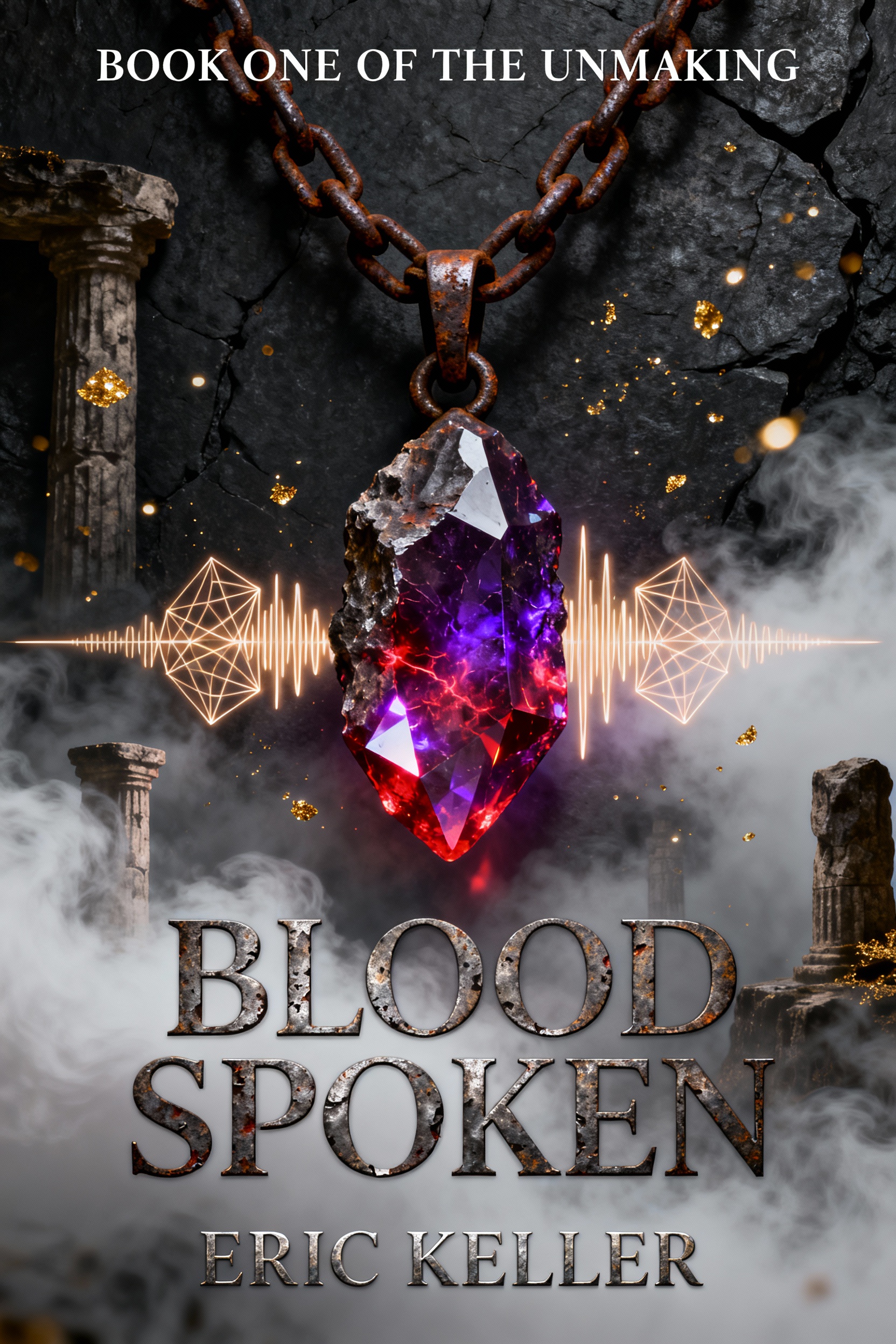
Looking for your next dark fantasy read? Blood Spoken features a voice-based magic system where spoken truth becomes a weapon, arena combat that determines who lives and dies, and characters navigating a world that offers survival—but never safety. Available now on Amazon and Kindle Unlimited.
Enjoyed this article?
Share it with fellow fantasy readers
Eric Keller
Author of Blood Spoken and The Unmaking series. Writing dark fantasy with morally grey characters and magic systems that bite back.
Learn more about the author →